
Shattered Glass, Bent Corner, Twenty Minutes on the BenchiPhone 17 Pro Screen Replacement — Downtown LA
A young mom rolled a stroller through the door with an iPhone 17 Pro that had lost an argument with the pavement — screen spiderwebbed, and one corner of the frame dented in. Before any repair happens here, the customer gets the full screen talk: LCD, OLED, or genuine, with the honest trade-offs and prices of each. She picked an OLED, we straightened the corner, and she was back to her day in about twenty minutes.
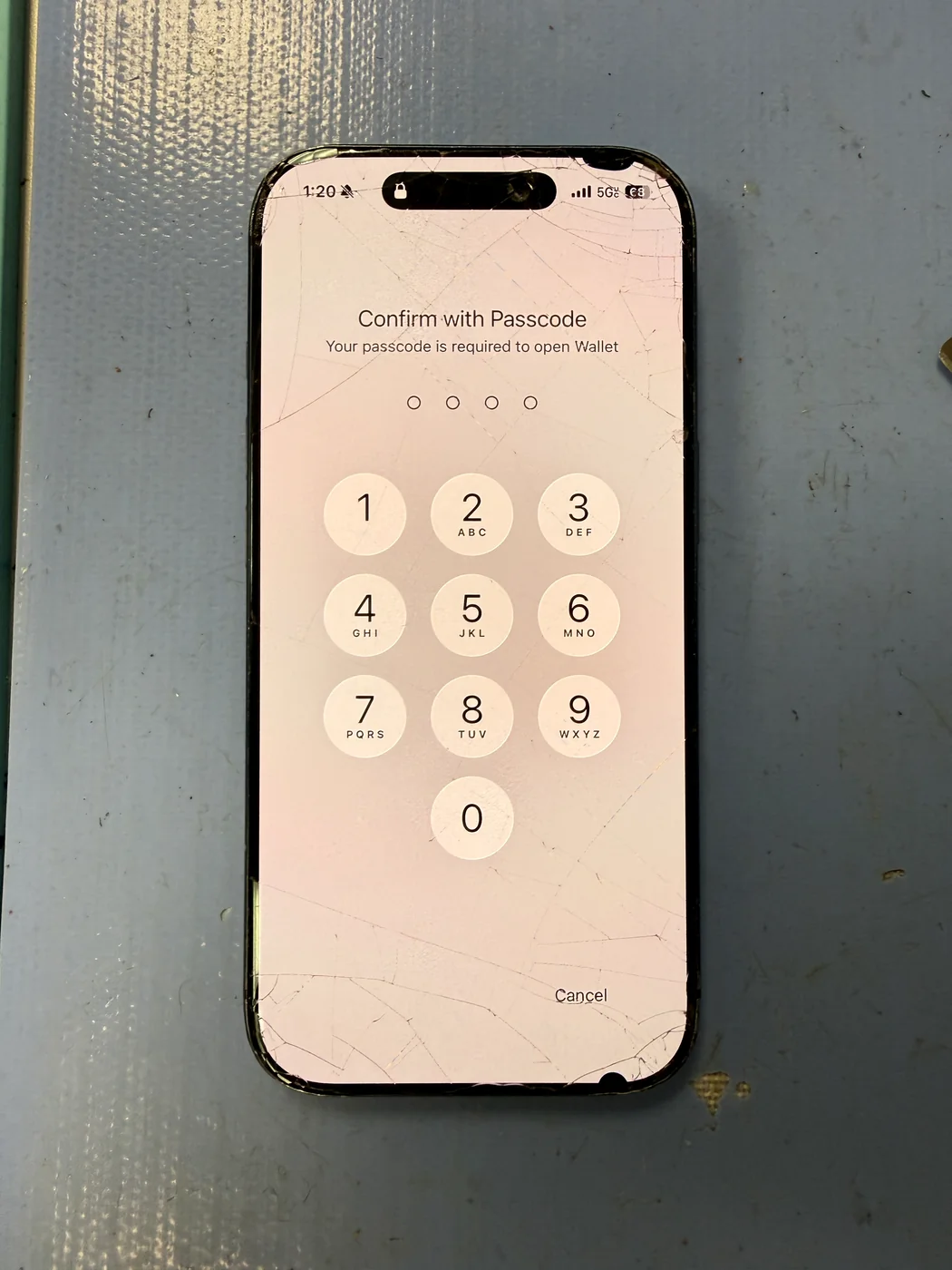
Cracked glass, dented corner pressing the panel
Chosen by the customer after the options talk
Frame straightened, OLED in, protector on
The job, on one card
Everything that matters about this repair, before the story.
| Model | iPhone 17 Pro |
|---|---|
| Problem | Screen shattered, and the frame corner dented inward — putting constant pressure on the panel. A new screen won’t even seat properly on a bent frame, and a pressured screen cracks far more easily on the next drop. |
| Part | Aftermarket OLED panel — the customer’s pick after hearing all three options. No repair here happens without the customer choosing it. |
| Repair time | About 20 minutes · screen alone usually runs 15 |
| Extras | Frame corner straightened before install · premium screen protector fitted after |
| Warranty | 30 days on the new screen and the work |
| Teardown | Careful work3 / 5 |
| Tech’s note | A quick word on the corner tool, because it made this job easy. These straightening jigs used to be sold per model — a new phone shape meant buying a new tool. The universal ones out now are inexpensive and genuinely good, so bent frames and dented corners that once meant an expensive housing swap are now a routine step before a screen install. Good time to be fixing phones. And the small talk was the best part of the visit — she told me she’s from Qingdao, China, and asked where I’m from. South Korea, I said. Two neighbors, meeting in a Downtown LA repair shop over a cracked phone. |
LCD vs. OLED vs. genuine — the talk every customer gets
Three very different panels can go into the same phone. Here’s the honest version, prices included.
Aftermarket LCD — the budget seat
The cheapest way to a working phone. But an LCD needs a backlight, which means a thicker bezel, heavier battery drain, and slower response than what the phone shipped with. Fine as a stopgap — know what you’re getting.
Aftermarket OLED — the sweet spot
Self-emissive like the factory panel: thin bezel, quick response, easy on the battery, and quality that gets close to genuine. Runs from the mid $100s to the low $200s depending on panel grade. This is what went into this 17 Pro.
Genuine — the factory panel
The screen the phone was born with, at a factory price — north of $400 for this model. When the budget allows, it’s the no-asterisk choice. When it doesn’t, a good OLED covers most of the distance.
Screen off, corner trued, new panel in
The dent gets fixed with the chassis stripped — a straight frame before the new screen ever touches it.
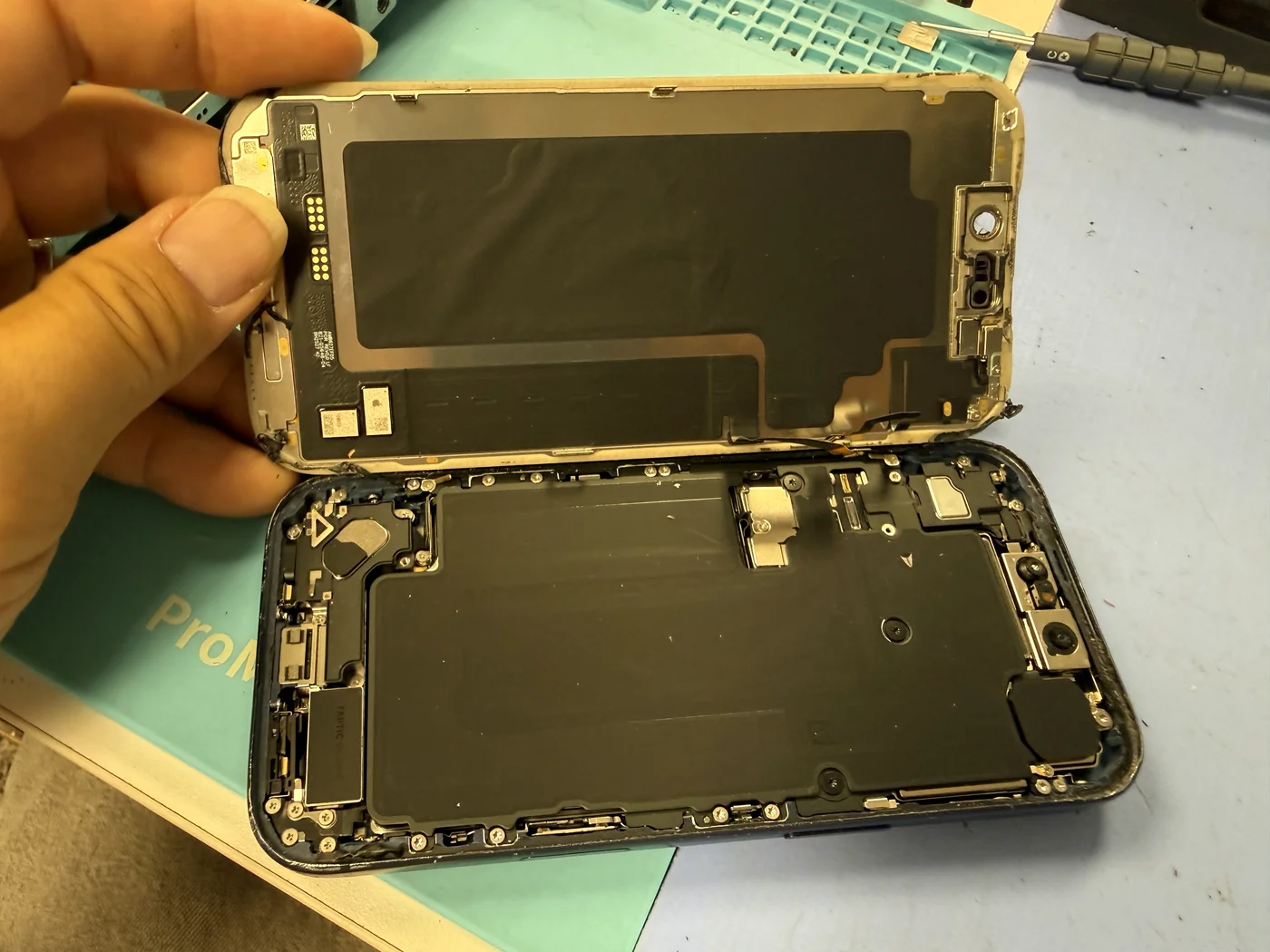
The shattered screen comes off
First, the shattered panel comes off the chassis — clean, practiced work on the 17 Pro. With the screen out of the way, the dented corner is fully exposed and ready for the jig.
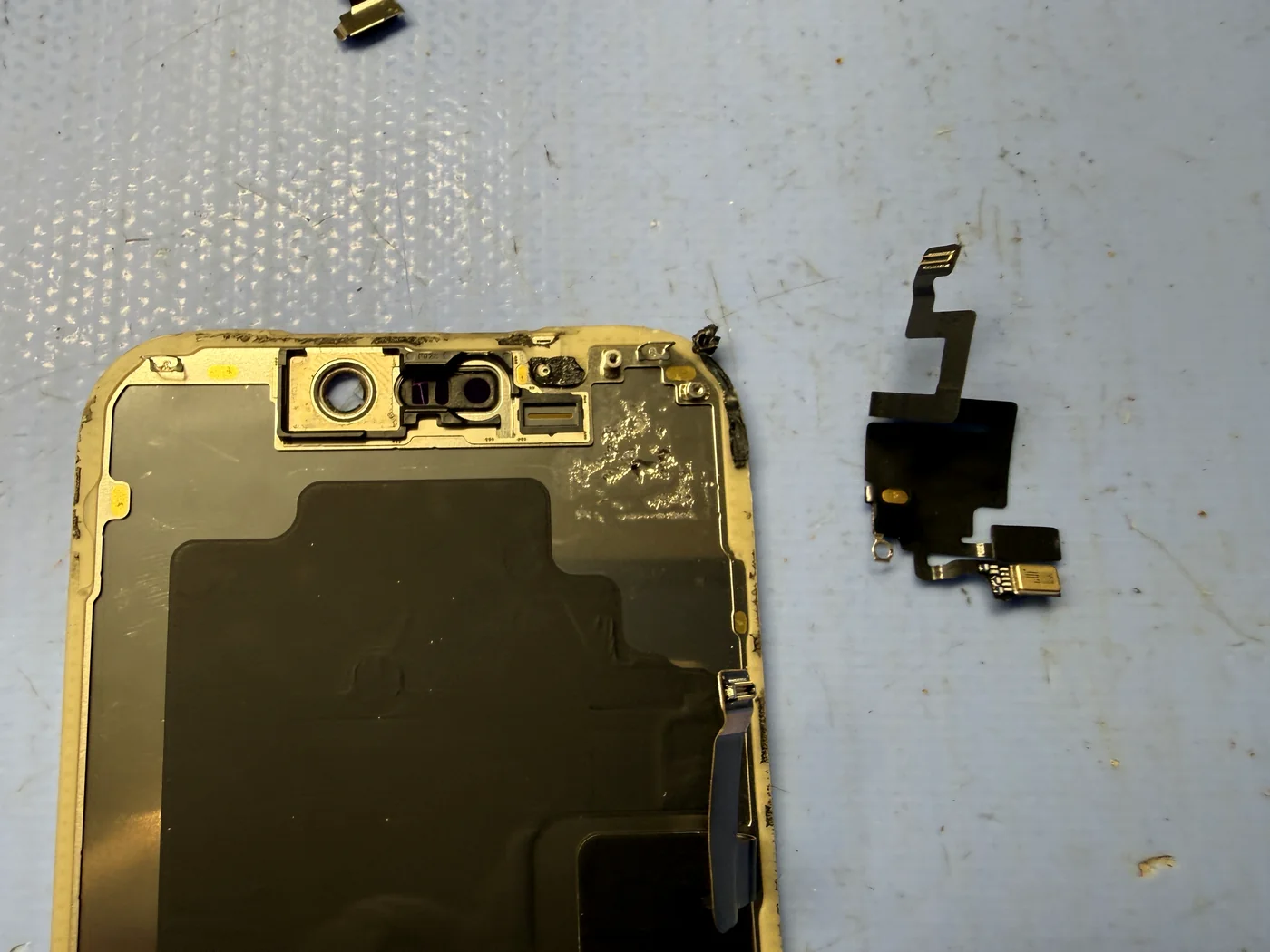
Harvesting the proximity sensor
One part on the old screen has to live on: the proximity sensor assembly. It comes off the shattered panel carefully — this little module is what turns your screen off against your ear on calls.
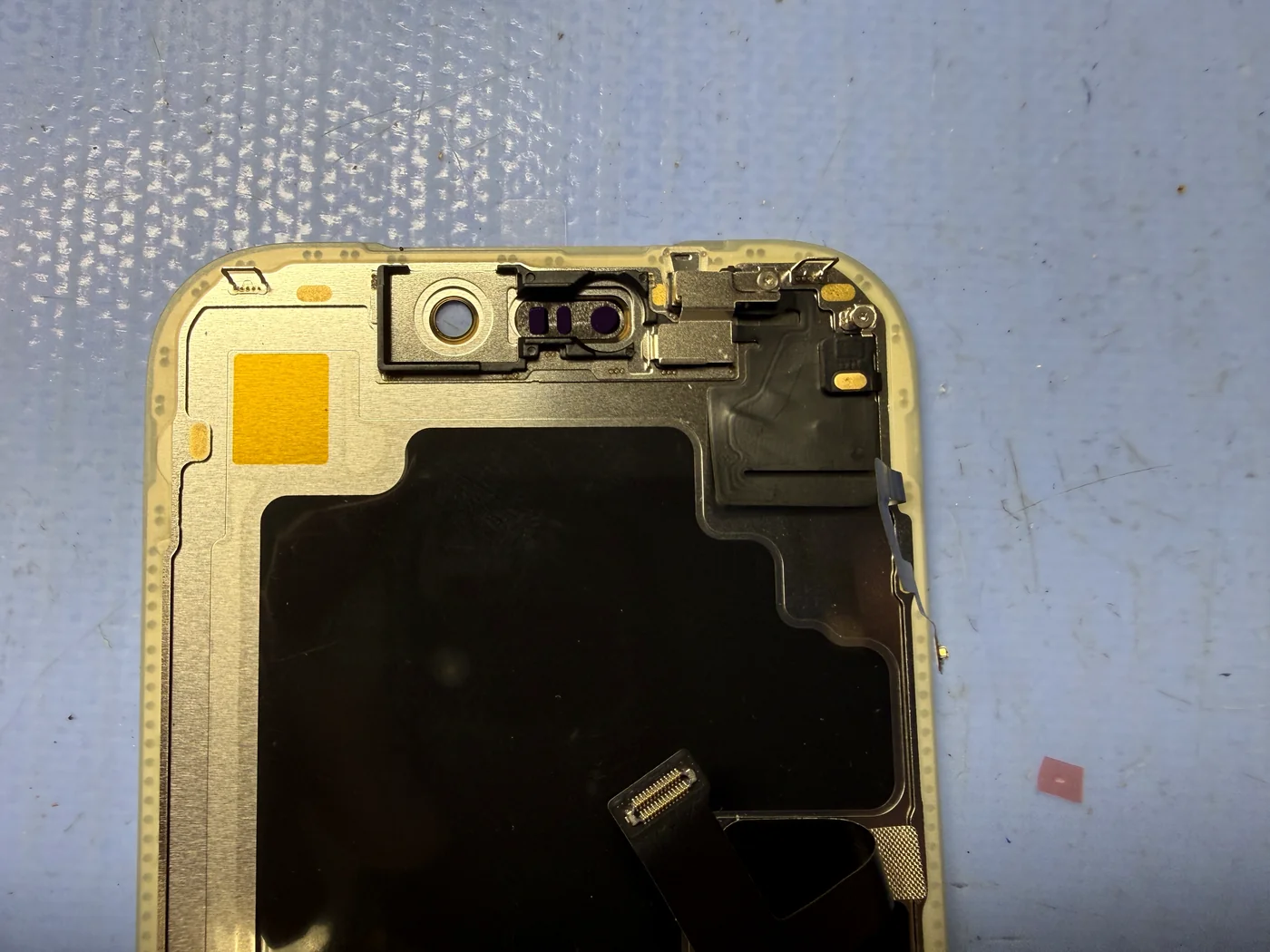
The sensor moves into the new OLED
The same sensor settles into the new OLED panel, aligned and seated exactly. Skip this transfer or rush it, and the new screen stays lit against your cheek on every call.
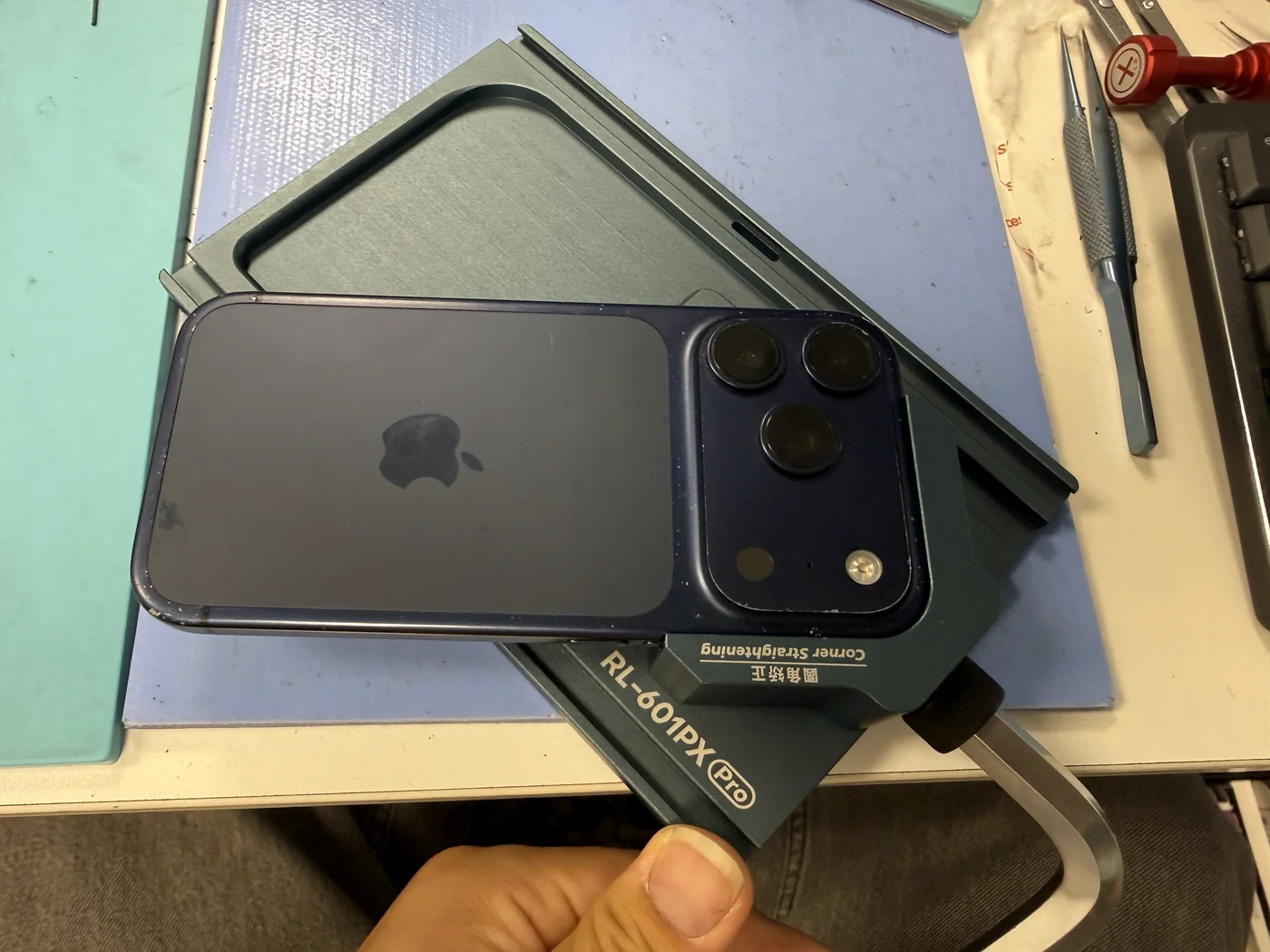
The corner comes back to true
With the chassis empty, it goes into the straightening jig. A dented corner keeps constant pressure on whatever panel sits above it — a new screen either refuses to seat or lives its whole life pre-stressed, ready to crack on the next drop. A few careful turns and the frame is true again, before the new panel goes anywhere near it.
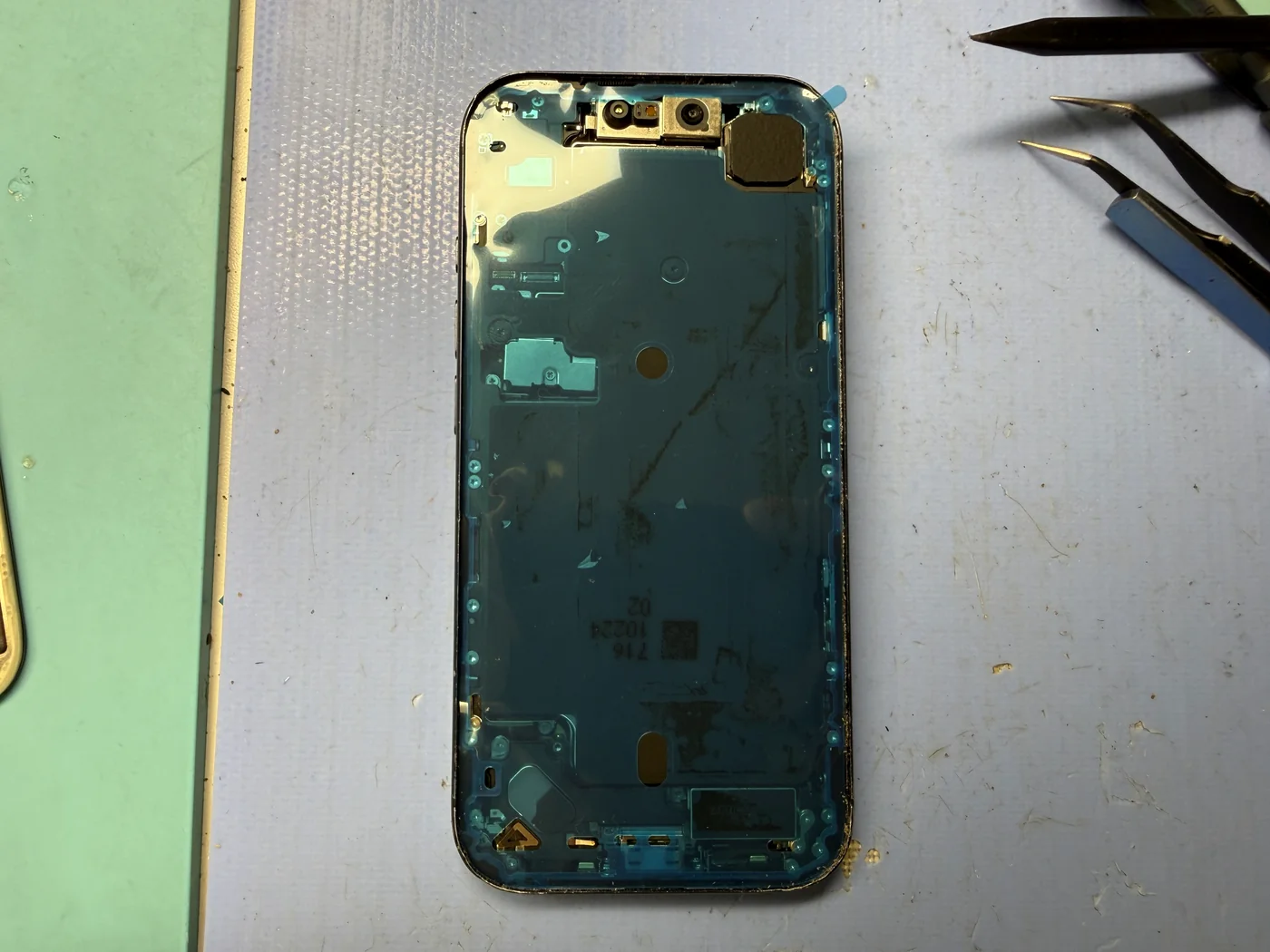
A fresh seal before the screen drops in
New water-resistant adhesive goes around the whole chassis before the panel seats. It’s what keeps everyday splashes on the outside — and it’s a step cheap repairs love to skip.
Twenty minutes, door to door
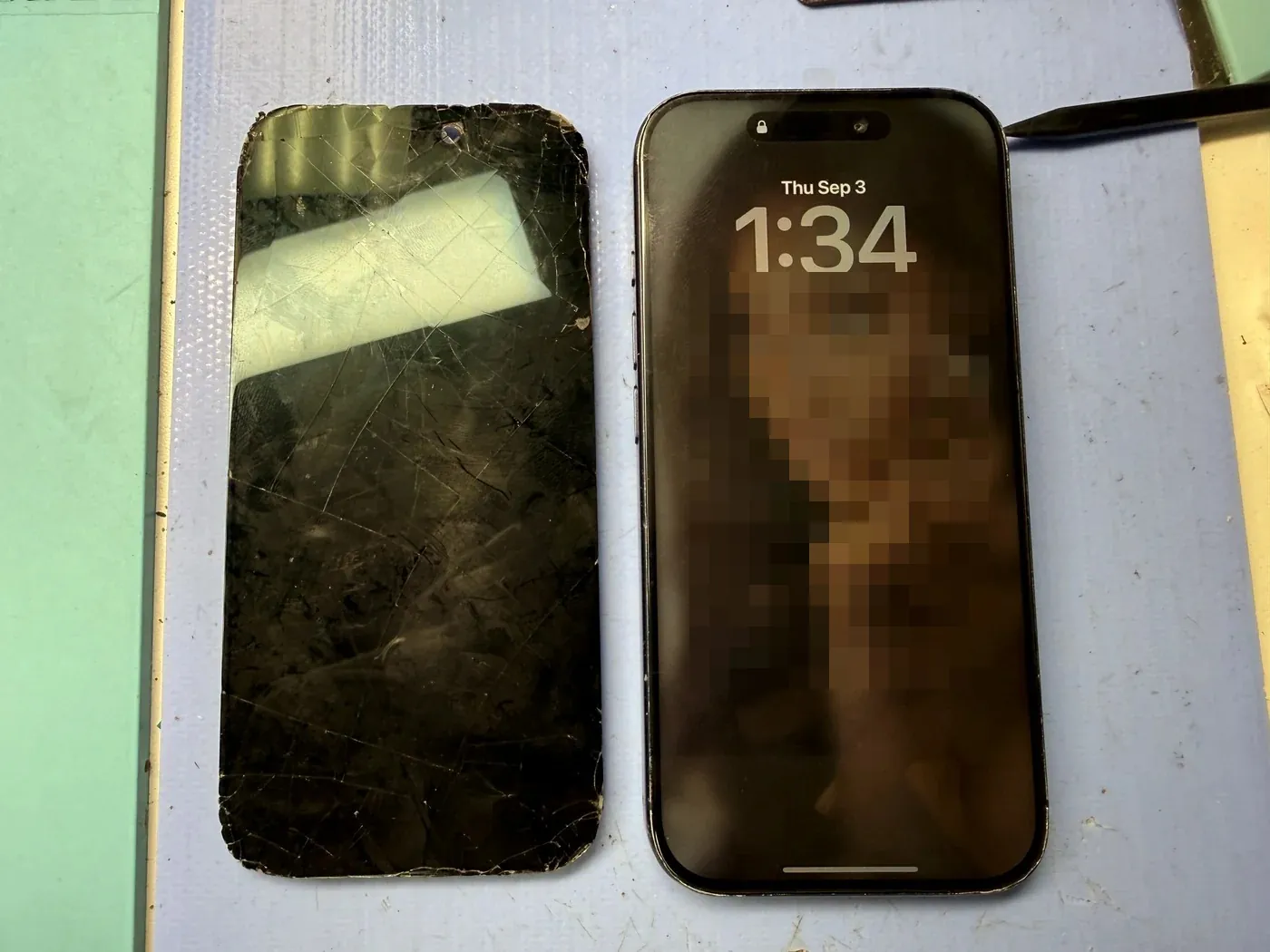
Old panel on the left, finished phone on the right.
Straight frame, new OLED, protector on top
Touch tested corner to corner, colors bright, frame sitting flat — and a premium screen protector fitted on top so the new panel gets a fighting chance this time. She rolled the stroller back out about twenty minutes after she came in, phone whole again, one satisfied neighbor from Qingdao.
The two questions everyone asks
Straight answers, as always.
Does my data survive a screen replacement?
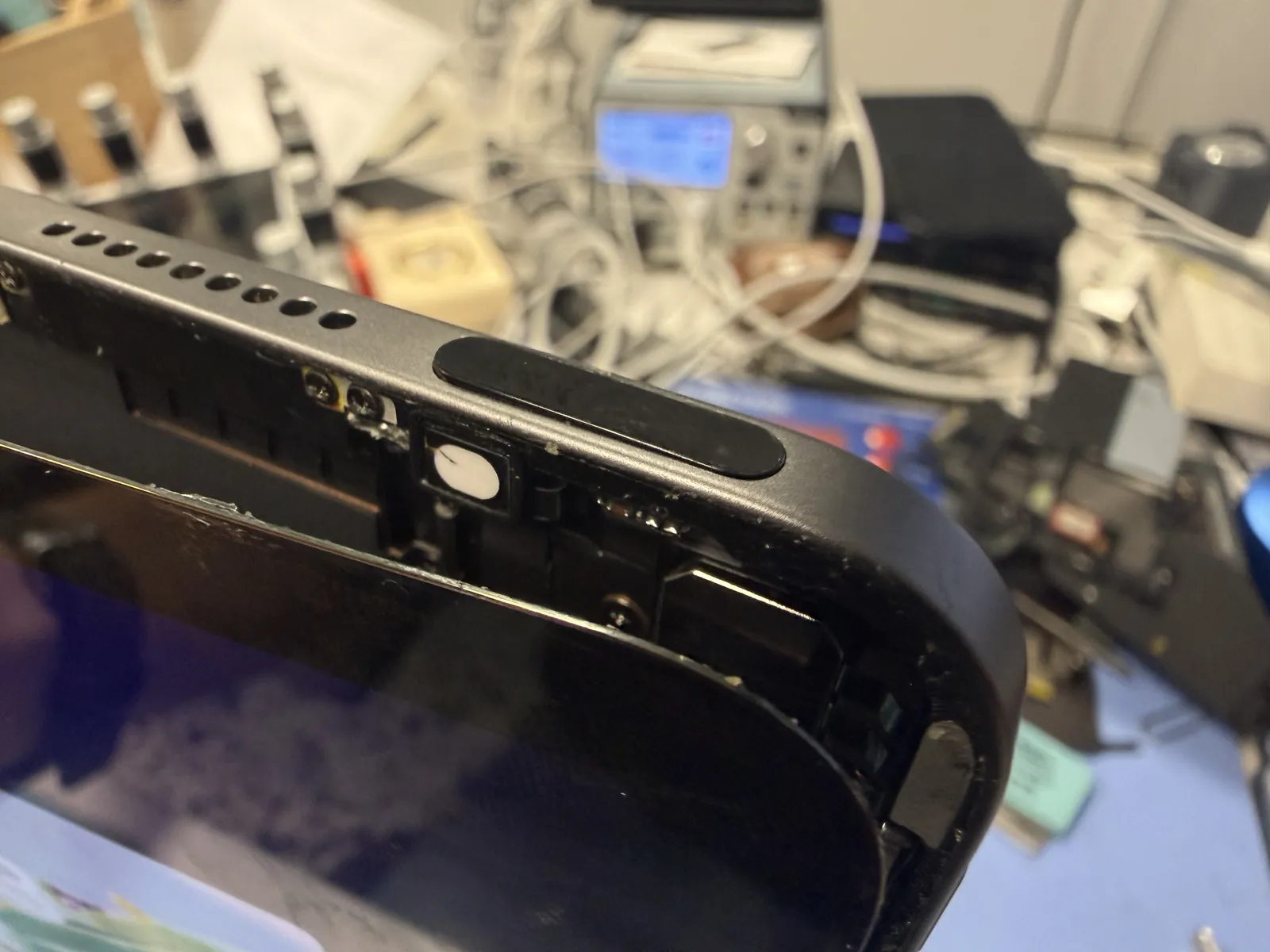
Yes — completely. A screen swap never touches your storage: photos, messages, apps, and logins stay exactly where they were. The work itself usually takes about 15 minutes; this one ran closer to 20 because the frame corner needed straightening first. Data stays put on every repair here — even board-level work like this dead iPad Pro 11 goes home with every file intact.
Can you do it while I wait?
For screens, usually yes — when the panel is in stock, you’re looking at 15 to 20 minutes in the chair. Stock varies by model and by panel type, so ask first: checking takes us about five minutes, and you’ll get a firm yes-or-no before you decide anything.
More honest repair stories
Same bench, same philosophy, different devices.
Cracked screen? Pick your panel with eyes open.
Bring it in — we’ll lay out LCD, OLED, and genuine with real trade-offs and real prices, and nothing happens until you choose. Most screens done while you wait. Walk-ins welcome in Downtown Los Angeles.